Independence schmindependence

We’ll need all the friends we can get if we’re going to get through the next few decades intact.  A few lone voices in Transition Town Berkhamsted (TTB) kept banging on about community.  I paid lip service to it, more as a means to an end, but now realise that it is fundamental.  Thank you in particular to Bridget, Trevor and Marc for the important lesson.

Early last year Ashridge Business School generously gave us the opportunity to host an event on any subject we wished.  After long debates we decided not to talk about climate change at all, but instead to call the day “Building Community” and the Future of Berkhamsted.  In organising the event we kept coming back to a circular discussion about how we would wheedle climate change back into the agenda, but the facilitator Chris Nicholls managed to persuade us that we should just let it go.

30 odd different community groups were invited and all accepted, from schools to business, council to sports, lobbying to charity.  All were very grateful for the opportunity to form a wider network and to look over the immediate false peak of our day to day lives.  There followed another Building Community day a few months later, where the theme of community space came through strongly.

TTB strategy is to go where the opportunities exist, following people’s energy as much as anything else.  To me, the most promising route was to concentrate on these Building Community days, develop our position as the glue for other groups in town and catalysts of positive change.  From there we would look at introducing a town plan or Neighbourhood Plan that considered the longer term, including local energy, food, transport and the like.

The third Building Community day built on the community space idea.  We decided to hold a design charrette for the area in the centre of the town that we understood was potentially up for development.

The B-Hive was born.

B-Hive logo
This proved to be a popular hit – the people of Berkhamsted really do care about their town being overdeveloped and losing its character.  A few people put in a lot of effort over a few short weeks to create a popular online presence and to be visible gathering signatories at the weekend markets and town fetes.  In a short time a mailing list twice the size of the TTB equivalent was populated.

Then the charrette came around, with a few hundred people coming through the doors to meet with a team of volunteering architects and urban designers to tour the sites, listen to talks, participate in hands-on workshops to sketch their own plans for the centre of the town, as well as listen to and watch local musical and other artists at play.

That was only the start.  The large pool of sign-ups provided another strange and very welcome quality.  They proved to be willing to help.  In short order, a team of about 30 people, including a sizeable team of architects, urban designers, surveyors, project managers and accountants set to work on a report of the findings.  It was hard work for all concerned, but worth it.

On 21 Oct a group of four of us met up with Dacorum Borough Council and with the Police Commissioner, key landowners on the potential development sites.  Both are now on board.  The Police originally delayed the sale of the former police station until we concluded our consultation, but now are running ahead with the sale.  The hopefully key and important difference is that the B-Hive report will be included in the sales pack.  This is the outcome for which we had hoped.

A bonus is that the people of Berkhamsted appear to want a town square and green space above anything else, i.e. more walking, talking and enjoying each other’s company and less driving.

Above all else, though, I have come to realise that the mere fact of getting people together as a community is the really important outcome of all of this.  It doesn’t so much matter what we manage to achieve regarding the developments in the centre of the town.  They are all a means to an end.  What really matters is that the relationships and interdependence between the people in the town is strengthened and made richer.

I originally thought that this building community work was a sideshow.  As far as I was concerned, we were just doing it to raise our profile.  How wrong could I be?

Our lives and the culture of our society are geared to make us more individual and more independent.  This will just make us all the more vulnerable when those faceless services of energy, food, money and water start to crumble.  We will be left with no support.

To really be able to cope, we need each other.

John Bell,

Ordinary bloke

Quick thank you to government for making me happy

A quick post this one. Who would have thought it, but I do believe the Tories are making me happier.

I have just had an interview with a guy working for the Office of National Statistics. One of the sets of questions was about well-being, asking for scores out of 10 for how happy I was yesterday and that kind of thing. I’m looking forward to the day that we use a measure such as that to determine the health of the country rather than the blunt instrument that is GDP.

Anyway, I digress. One of the questions was to ask me on a scale of 1-10 whether I think I am doing the most worthwhile thing with my life. I confidently said “10” – nothing could be more important than securing the future of my family and the integrity of life on earth.

Later, while making myself a piece of honey on toast (thank you local bees via Cris Baker for the honey), I started to think about the question. If this well-being measure was being used to see how well a government is getting on, I’d be contributing to the Tories being able to say that people are getting happier. “Cheeky buggers” was my initial thought. It’s me that’s making me happy, not them – I’m happy and fulfilled in spite of them, not because.

Then I thought a bit more. Actually, I’d have nothing to strive for if the Tories weren’t so weak and being so short-termist and reactive to Daily Mail headlines.

It’s a bit of a odd, roundabout way of going about making me happier, but thank you Tories all the same.

I’d rather you sorted climate change out, though, if its all the same to you.

100 things to do before I die

I’ve had a bit of fun delving into my inner self to figure out what I want to do with my life.  Not that death is just around the corner.  Partly it is to give me a sense of purpose, partly just out of interest.  I’ve surprised myself.

I’m writing it from the perspective of the me that started university, at the point that I started to know myself for the first time.

Which means I can put a few things on here that I’ve already done, so I can feel good about myself as I tick a few things off.

Here we go.

    1. Get a degree. DONE
    2. Get a job. DONE
    3. Get married. DONE
    4. Own a house.  I kind of do, but there is a whacking great mortgage to go with it, so that doesn’t really count.  UPDATE: Mortgage paid off a couple of years back, so now DONE.
    5. Have children. DONE
    6. Read the Bible and the Koran. DONE
    7. Accidentally slip on a banana skin. DONE Was a difficult one to achieve, ‘cause you can’t do it deliberately.  Happened outside Euston station one night on the way home from work.  How I chuckled.  Says something that it was the homeless that came to see if I was alright, even if they did ask for change when they saw I was fine.

Banana skin

  1. Write a book.
  2. Get a book published.  Makes sense at the moment – might need to revise that one in the digital age.
  3. Make a leap of faith.  I.e. Find God or decide He’s not there.
  4. Have a photo of a miniature I’ve painted printed in a magazine.  Yes, I still hold on to that obsession from when I was a spotty teenager.
  5. Play a musical instrument, probably a violin.
  6. Speak another language fluently.  Climate change jargon doesn’t count.
  7. Live in an idyllic house in the country where we can live off-grid.
  8. Write a list of 100 things to do before I die.  This is hard.
  9. Catch a thermal under a hang-glider.  To date, I’ve only ever managed short flights or ridge soaring with ropes attached to the wing tips.  UPDATE: Have done a couple of solo paragliding flights, but not yet caught a thermal.
  10. Parachute jump.  How I’m going to get up there without a plane I have no idea.
  11. Travel round the world.  Without flying, of course.
  12. Ride a bike with no hands.  I don’t mean the bike has no hands, I mean I haven’t got mine on the handlebars.  Of course.  Obvious.  UPDATE: Did this last year, before lockdown.  DONE.
  13. Run a marathon. DONE Fantastic experience.
  14. Swim a length under water.
  15. Get pecs.
  16. Go to a celebrity party.  Why on earth?  Shallow.
  17. Get a scientific paper published in a reputable journal.
  18. Patent an invention.
  19. Start a business (not a stupid one – see http://www.onlinetaskmanagement.com). DONE
  20. Sell a business.  UPDATE: Sold Bellvedi April 2019. DONE.
  21. Cook a really good roast with roast potatoes like my Mum used to makes.  She still does.
  22. Win the treble on Championship Manager.  DONE Did it with Cardiff in the middle of the nights while looking after Maddie when she was a baby.
  23. Achieve Enlightenment.
  24. Reach 100 with full use of my faculties.
  25. Keep chickens.
  26. Become a doctor.  Non-medical, I’m assuming.
  27. Get some sort of award, like a MBE.
  28. Make a will.  UPDATE: Completing that now (Dec 2020).  DONE.
  29. Appear in a blockbuster film.  As an extra is fine.
  30. Hit a 180. DONE
  31. Become my own boss.  DONE
  32. Make a pot using a turntable.
  33. Walk up Ben Nevis.
  34. Walk up Snowdon. DONE
  35. Ascend Snowdon via Crib Goch.  Tried it once but left it much too late, and my brother was in a cast, so we sensibly turned back.
  36. Learn how to chop food really fast like a chef.
  37. Bake a moist, tasty fruit cake.  Maybe a Christmas cake.
  38. Make a timelapse animation.  Like Morph.
  39. Truly realise I don’t need to do any of these things.  Not just say so.
  40. Walk my daughters down the aisle.  If that’s what they want to do.

I’ll give it a rest there.  I need to leave room for a future me to think up a few more things.

And then I found an old list I wrote a couple of years ago, where I’d only got to number 26.  But it did contain some other things that aren’t in the list above:

  1. Finish The Hobbit BBC microcomputer game.  I am tempted to take this off the list, but can’t bring myself to do it.  How do you get past those pesky elves?
  2. Read the full works of Shakespear.
  3. Live in a house with a fireplace.
  4. Learn how to plumb.
  5. Learn how to do electrics.
  6. Go to the Globe theatre.
  7. Show a painting or picture in a gallery.

Which leads me to think of a few other things:

  1. Learn how to work with wood.
  2. Learn how to survive in the wilderness.
  3. Teach my kids some practically useful skills.
  4. This one just in.  Thank you Trevor.  Tell my son, in no uncertain terms, that he is a man, at the point that he becomes a man. And tell my daughters they are a woman.  UPDATE: This one hasn’t aged well.

John Bell,

Ordinary bloke

How I did it

Rain was forecast.  It didn’t surprise me that the sun was high in the sky.  It was a friend’s 40th and we were on a circular stroll through the ancient Ashridge woods, from and to the homely Valiant Trooper in cossetted Aldbury.  Lovely food.  A friendly conversation with a couple I’d just met lead me to realise I’ve not covered how I reduced my emissions in this blog.
Colours of Autumn | Ashridge Park, Hertfordshire, UK | Autumn vi
I was chatting to Will and Anne, friends of the birthday boy.  I’d barely had time to christen them “Will-I-Anne” (oh, I am a funny man) before we got on to the inevitable subject of what we each “do”.  Will is a TV producer and Anne a financial solicitor.  I had more trouble describing what I “do”, but inevitably it lead to a discussion about climate change.

I described this blog and how I’ve been trying to show that a low impact lifestyle is thoroughly fulfilling and worthwhile.  They asked the obvious follow-on question – what would I recommend that they do to reduce their own emissions?

For me, it’s been a roundabout journey.  I guess it really started only a handful of years ago around the time I got involved with Transition Town Berkhamsted.  I was concerned about climate change but hadn’t really made any concerted changes in my own lifestyle.

It was probably setting up and running an Eco-team that kick-started me into action.  The idea is for a few friends to measure their energy, petrol-use, gas, water and even to weigh your rubbish and recycling, and then to progressively look at reducing each in turn.  We’d go through a few hints and tips for each and implement them.  I learned about the 10-second rule for idling cars, put a hippo bag in my toilet cistern, got a new boiler and the solar panels installed, started using washable nappies (not me, the baby), and looked for produce without packaging.  I saw a huge decrease in my consumption – of about 30-40% for each of gas, electricity, water and rubbish.

So first step I’d recommend would be to measure your foot-print to find out where the major problem lies.  It’s the same way a business might approach the job of reducing costs or a computer programmer might look at making a process more efficient.

Once you’ve worked out what the big hitters are in your lifestyle, you’ll need to work out how to cut them out.  It is likely though that the biggest changes you can make concern your travel habits and how much stuff you buy.  One holiday at home rather than flying is going to be worth an awful lot of recycling.

Don’t get me wrong, I did make those obvious little changes that save money and avoid waste, such as getting cavity wall insulation or replacing high-energy light-bulbs.  That’s just not the whole job done, by any means.

Turned out that Will-I-Anne had made quite a few changes in their lives already, but were not convinced that making further changes on their own would be worth it – they argued that it needed central co-ordination from government rather than individual action.  Though they did amiably agree that just because government aren’t forcing change does not devolve you of responsibility.

In the end they decided that they would offset for their remaining big emission habit – flying to Oz to see relatives – by paying someone to sequester some carbon dioxide for them.  While it would be better to avoid the emissions altogether, at least this will mean that their emissions now are lower than they would have been.  If everyone offsets the capacity for offsetting will be reached and the price will go up, then they will need to look again at their habits.

I hope that helps.

John Bell,

Ordinary bloke

Don’t pin your excuses on US & China

There is no point in trying to reduce your emissions because of China or the US. You may think that or at least you may have heard it said. As it turns out that is no excuse – they are doing their bit, you need to take responsibility and do yours (and life is much better if you do).

  • In April, the US and China made a joint statement that current mitigation against climate change was inadequate and that it is “essential to enhance the scale and impact of cooperation on climate change”.
  • Since they have shown that they are getting serious about climate change.
  • In the words of US Secretary of State John Kerry (No. 2 in the US):

Obama_and_Wen_Jiabao
“This [the 5th IPCC report] is yet another wakeup call: Those who deny the science or choose excuses over action are playing with fire.

Once again, the science grows clearer, the case grows more compelling, and the costs of inaction grow beyond anything that anyone with conscience or common sense should be willing to even contemplate.

Boil down the IPCC report and here’s what you find: Climate change is real, it’s happening now, human beings are the cause of this transformation, and only action by human beings can save the world from its worst impacts.

This isn’t a run of the mill report to be dumped in a filing cabinet. This isn’t a political document produced by politicians.

It’s science.

It builds on the most authoritative assessments of knowledge on climate change produced by scientists, who by profession are conservative because they must deal in what is observable, provable and reviewable by their peers.

If this isn’t an alarm bell, then I don’t know what one is. If ever there were an issue that demanded greater cooperation, partnership, and committed diplomacy, this is it.

What one country does impacts the livelihoods of people elsewhere – and what we all do to address climate change now will largely determine the kind of planet we leave for our children and grandchildren.

With those stakes, the response must be all hands on deck. It’s not about one country making a demand of another. It’s the science itself, demanding action from all of us.

The United States is deeply committed to leading on climate change. We will work with our partners around the world through ambitious actions to reduce emissions, transform our energy economy, and help the most vulnerable cope with the effects of climate change.

We do so because this is science, these are facts, and action is our only option.”

But is this idyllic life worth it?

If ordinary folk around the UK and the West spent a lot more time at home and with family and friends and less time buying crap and travelling, the climate crisis would be largely solved.  I’ve made the change and am loving it.  How does that lifestyle play out in the numbers?  Is changing to my idyllic life worth all the effort?  And how guilty should I feel about having thrice sprogged?

I’m talking greenhouse gas emissions here, the driver of man-made climate change, not money – my outgoings are drastically lower than they were, but that’s another story.

According to carbonfootprint.com (I got a similar total using the simpler calculator on the WWF site, but with less of a breakdown), my annual emissions break-down as 0.85 tonnes of CO2 on gas & electricity; 0.87 tonnes on petrol; 0.19 tonnes on the train; 1 tonne on owning a car; and 1.28 tonnes on “other” (including having a bank account – 0.4 tonnes and eating animal produce – 0.5 tonnes).  Total is 4.2 tonnes per annum, against the UK average of 9.8 tonnes.  I would be interested in what yours looks like – you need your annual gas & electric figures plus your annual mileage – settle down with a cup of tea and work through the site, doesn’t take very long.

But what about the elephant in the room – my kids.  At the moment, they each cause about 0.44 tonnes per annum in addition to the above.  But that will change as they become adults.  What would my emissions look like if I took complete responsibility for all of their emissions, because Rowan and I took the decision to procreate?

So I did a few simple calculations, and came up with the following graph of my cumulative emissions.  This doesn’t include me using Ecotricity* to buy the electricity off the grid (51% of their electricity is generated from renewables).  Is does assume that emissions are coming down in general, and doesn’t include the emissions of grandchildren.  I reason that these effects probably offset one another.
Graph cumulative tonnes CO2
What does it tell me?

First is that the most important thing I can do over the next few years to reduce my own emissions is to impress on my kids the need to look after their world – it will save about 100 tonnes if they act as I do rather than the average in the UK.

Secondly, I can feel a little less wracked with guilt about the children because if they do adopt a lifestyle like mine my and their emissions combined will total less than that of an average single UK resident of my age.  And if you include the average UK resident having an average number of average children, then our emissions will be less than half of theirs.

Then there is the question of carbon offsetting – where you pay someone else to put in place some scheme that reduces emissions to compensate for your own.  This could be building more renewable energy stations, for example.  I invested in an avoided deforestation scheme, where an area of rainforest that was due for the chop was saved, offsetting 100 tonnes.  If you include that, then my overall emissions including the children is less than 100 tonnes in our combined lifetimes, compared with an average in the UK of 380 tonnes.  This is controversial, because of double-counting – would the scheme have gone ahead whether or not I invested?  And is it a get-out-of-jail card for everyone – is there enough capacity that if everyone offset their carbons we’d be home and dry?

I think that if the top 1-5% of emitters, roughly speaking those who earn £30K or fly once a year or more, adopt a lifestyle more like my own, devastating climate change would be avoided.

Would you like to be part of the solution?  How can I help you?

John Bell,

Ordinary bloke

* Ecotricity have recently been able to change their tariffs so they can offer gas & electricity at a rate cheaper than the Big Six.  They also invest on average £280 per customer in building new renewable power stations.  They can do this because renewables are getting cheaper, whereas fossil fuels are not.

So who has the solution?

So who does have the solution to climate change? The answer is surprising.

Rather than try to find the person or people to blame and vilify about what we have done and continue to do to exacerbate the problem, might it be more fruitful to look for the group of people who are most able to get us out of the hole?

If we’re thinking about a technological solution, then it could be any one or more of a number of scientists, inventors or entrepreneurs.  How about a solar greenhouse?  Or farming practices that capture carbon dioxide?  Trouble is that the world is a big place with a lot of people in it – and it takes time for new technologies to roll-out, especially on an industrial scale as would need to be the case.
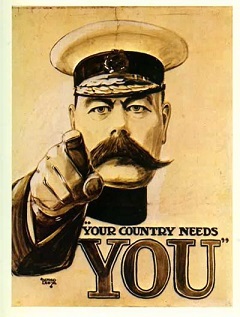
Your Country Needs You
Technology will probably be part of the solution, but probably not quick or comprehensive enough (too little, too late).  So who else?

We could look at who has the power to decide how much of the different greenhouse gases to emit.  Of course, that includes everybody, to a greater or lesser extent.  If you walk over to the light switch and switch it on or off, you are creating or stopping some emissions.  So we can all reduce the emissions for which we are responsible.

But let’s look at those who have the greatest sway on the level of emissions.

It is the way of the world that power is always concentrated among a tiny minority.  By applying the 80-20 rule three times, scientist Kevin Anderson showed that 40-60% of emissions are the responsibility of 1-5% of the global population. These super-rich have the keys to the solution for climate change.

But just who are these super-rich?

Turns out that in western terms, super-rich doesn’t seem that wealthy.  If you earn £30K or more per annum or fly once per year, it’s you.

It’s you.

John Bell,

Ordinary bloke

Habits

To some it might seem a little crazy that I’ve jacked in the permanent job, don’t fly and forego the convenience of the supermarket to buy more local food.  When I tut while someone’s car idles as the driver runs back to their house for their purse, I have to remind myself that I did not always think like this, and it has taken years for my attitudes to change.  Yours may change too, given time.Crazy

Not very many years ago, I wanted to fly around the world and visit every corner.  I flew to the south of Spain for a golfing break, for goodness sake.  I flew to Canada for a snow-boarding holiday.  I flew all over the place.

When I first learned to drive, I used to tear around the lanes of Anglesey as fast as I could.  Seems ridiculous now.  After a few points on my licence for overtaking on chevrons, my attitude changed.  I then made a point of driving at the speed limit.  I’d leave a 30 mile and hour area to de-restricted and would accelerate as fast as I could to get to 60.  I’d make a point of driving at a constant 80 on the motorways (everyone did – they were talking about changing the limit in any case).  Idiot.

I don’t think there was any particular moment when I suddenly became aware of the carbon emissions I was causing.  Over time, I have changed my habits, one by one – it’s kind of crept up on me.  I haven’t flown for years.  I drive at 60-65 max.  I take the slower, direct route rather than nip onto the A41 and zoom down the dual carriageway to get to Hemel Hempstead.

I’m sure my attitudes and habits on other things will change over time as well.  Vegetarianism, here we come.

It has been a slow accumulation of knowledge and understanding that has lead me here, such as reading a lot of New Scientist articles, being part of Eco-teams and finding out lots of useful titbits (such as the 10 second rule for switching off your car engine).

My point is that I should not get angry with others when they do what I used to do – they’ve just not yet been on the journey so they are aware of what they are doing.  And my point to you, the reader, is that you are likely to go on that journey as well.

Talking to a friend Steve about this yesterday, he commented that his habits are slowly changing.  “Baby steps”, he described it as.  He now will choose the UK tomatoes rather than those from Holland, for example.

Some of you will probably be reading what I do now and think I am a bit of a lunatic.  I hope you will remember to look back at this in 10 years and compare with your attitudes at that time.

John Bell,

Ordinary bloke

Under my hood

I thought I’d let you inside, to shed light on what someone who campaigns about climate change feels under the hood.  In my last post I mentioned that we can appear to be pleased about climate change and I promised to let you know the true picture.  I’d be interested to hear from anyone reading how much of this rings true for them, or if I am alone.
Me8 for main
How is it that everything we feel we want to do turns out to be bad for us?  I love a drink occasionally, but that’s not good for your health, breath, head the following morning or for avoiding leaving the door open overnight.  Fry-ups, cake, biscuits, pork pies, doughnuts – I’m salivating, thinking about them – but they’re not good for your arteries and processed meat leads to the big C.  Sex before marriage will send you to hell.  Some love to smoke, but that leads to the bigger C.

And it turns out that having bright, dimmable lights that some on instantly; Me7 for mainlong showers; too much heat in the house; open fireplaces; and travelling anywhere more than a few short miles away are bad for the planet*.

I’m not a religious man (I categorise myself as an active agnostic) – but this does all bring to mind the apple in the Garden of Eden.  I often wondered what that symbolised – maybe it refers to everything desirable being bad?

Thing is that booze, greasy food, shagging about and smoking really only hurt the person doing them†.  I’ve no problem with that – do what you like.
Me2 for main
Wasting energy and burning fossil fuels, however, don’t really hurt the person doing them.  They mainly hurt people in other parts of the world (if you are in the developed world while reading this) or in the future, such as our children.  Because of this natural injustice it makes me Angry when people ignore the issue, blame China and the US while continuing with bad habits and make out their opinion on the scientific facts are as valid as 99% of scientific studies.

The other deep emotion I feel is mourning for the lost future.  When I delve deeply to understand the root of this feeling, I realise that it is not only about the potential for world conflict and the loss of the natural world, but also my own personal lost future.  Me1 for mainThe increasing apathy and even antipathy towards climate change makes me realise that I need to devote more and more of my own life to the cause.  As former BP CEO Tony Hayward famously once said “There’s no one who wants this over more than I do. I would like my life back”.

The emotions aren’t all negative, of course.  This resolve gives me a life purpose that is hard to find from any other activity.  As Bill McKibben said “Whatever else you were planning to do next, nothing could be more important”.
Me6 for main
I am also hopeful, even confident, that we will eventually win the argument.  It is almost inevitable.  Nature will not allow us to ignore climate change forever, as it will crank up the stakes and shove it in our face and across our flood plains.

How about others?  When it comes to climate scientists, it seems that those that engage their emotions rather than carry out their duties in a detached way can feel depressed, even suicidal.  A far cry from inventing the issue to get grant money.

How does it make you feel?

John Bell,

Ordinary bloke

* Caveats required here: These days you can get fantastic bright, dimmable low energy light bulbs and you can heat your house with renewable energy sources, such as by capturing the heat from a log fire.  I’ll stick by the others.

† Uh oh, more caveats.  Yes, all these things done to excess can ruin families and cost the health service a fortune.  And there is passive smoking.

Here we go again.  Of course it will hurt your back pocket.  And too much driving means losing out on the opportunity of more exercise.  And there are floods, droughts, crop failures and increased food prices.